
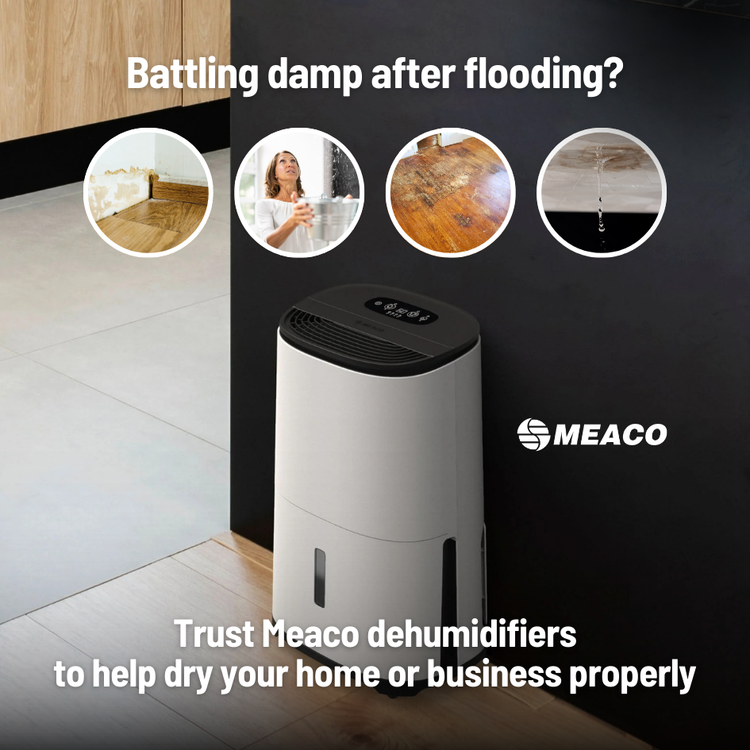
Battling Damp After the Ireland Floods: How to Dry Your Home or Business Properly
5th Feb 2026
Recent weeks have seen severe flooding across parts of Ireland, leaving many homes and businesses with waterlogged floors, saturated walls and the challenge of drying out once the water has receded. Even after visible water is gone, excess moisture can linger in plasterwork, flooring and building materials, creating the risk of mould, structural damage and long-term damp problems if it’s not dealt with effectively.
One of the most effective ways to support the drying process in flood-affected properties is by using a dehumidifier. Not only does it help speed up drying, but it also reduces humidity in the air, making conditions less favourable for mould and damp to take hold.
How Does a Dehumidifier Help After Flooding?
A dehumidifier works by drawing moist air in from your space, removing the excess water from it, and then releasing drier air back into the room. This process lowers the overall humidity level, allowing saturated materials to release moisture more quickly. In a space recovering from flooding, this can make a significant difference in the speed and thoroughness of drying.
Choosing the Right Dehumidifier for Flood Aftercare
Not all dehumidifiers perform the same in every condition. In cooler, damp environments like basements, garages, conservatories or halls, desiccant dehumidifiers are often the better choice because they maintain drying performance even at lower temperatures. At Meaco, the DD8L models are designed to operate efficiently in spaces as cold as 1 °C, making them ideal for flood-affected areas in Ireland where conditions can be chilly during drying.
Tips to Get the Most Out of a Dehumidifier After Flooding
To maximise drying and support the health of your home or business, follow these practical tips:
-
Place the dehumidifier on a level surface — this ensures it runs efficiently and safely.
-
Consider using a hose drain — many models can drain continuously via a hose into a sink or drain. Keep the hose as short as possible and avoid coils to prevent blockages.
-
Add warmth and airflow — gentle heat and fans help saturated walls and floors release moisture more quickly.
-
Work room by room — concentrate drying efforts on one space at a time with doors closed to maintain effective airflow.
-
Seal the space where you can — closing off gaps around windows and doors helps the dehumidifier do its job with less interference from outdoor air.
Why Proper Drying Matters
Damp that goes untreated after flooding can lead to mould growth, musty odors, damage to plasterboard and timber, and long-term issues that are both costly and unhealthy. Removing excess moisture from the air isn’t just about comfort — it’s about protecting your property and wellbeing as part of the recovery process.